
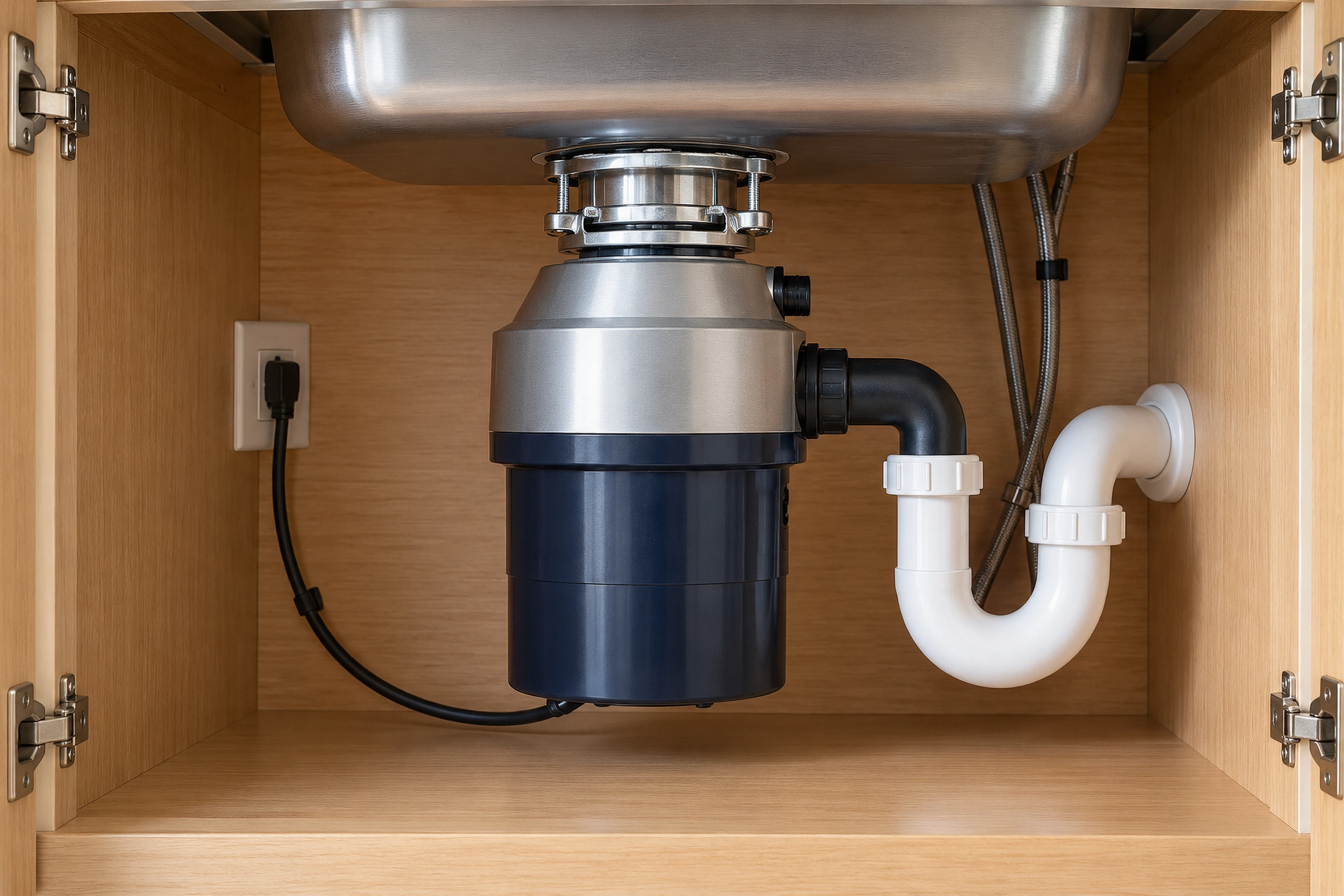
Repair guidance / Tweeny / BR2
The switch produces no response
Tell us whether the unit uses a wall switch, an air button or a stopper-operated arrangement. Different methods need different assessment. Do not open switch housings or bypass the operating control to prove whether the motor runs.
A different pattern: a stopper-operated unit will not start
Identify the batch-feed model and describe whether its correct stopper is present and seating normally. A stopper is part of the operating arrangement rather than a generic sink accessory. Do not defeat the interlock or force operation with another object.
A fitted appliance behind a furniture door
Describe the visible furniture panel, plinth and surrounding cupboards. A built-in appliance needs its access and connection arrangement checked before removal; do not detach cabinetry or pull the appliance forward to make the enquiry.
Identify this Tweeny model
For an existing Tweeny disposer, a clear label and description of the controls are more useful than cabinet dimensions alone. Older model acceptance and replacement suitability need individual confirmation.
Preparing the Keston visit
Keep the Keston address and complete postcode together with the equipment details. Mention whether this enquiry concerns a fitted appliance, an existing pump or a unit below the kitchen sink so the intended work is clear before booking.
Questions for this repair enquiry
What details help with “the switch produces no response”?
Keep the last successful operation separate from the first sign of the problem. For a report of “the switch produces no response”, say what still works and what no longer happens. If the other pattern, “a stopper-operated unit will not start”, has also occurred, include its timing as a separate observation. Send these details with the full model and your Keston postcode; they prepare the enquiry without identifying a part in advance.
How does “a stopper-operated unit will not start” change the enquiry?
Treat that as additional evidence rather than proof that both symptoms have one cause. Explain whether the two patterns began together or appeared at different times. Include the fitting context — a fitted appliance behind a furniture door — so the assessment can account for safe access as well as the reported behaviour.