
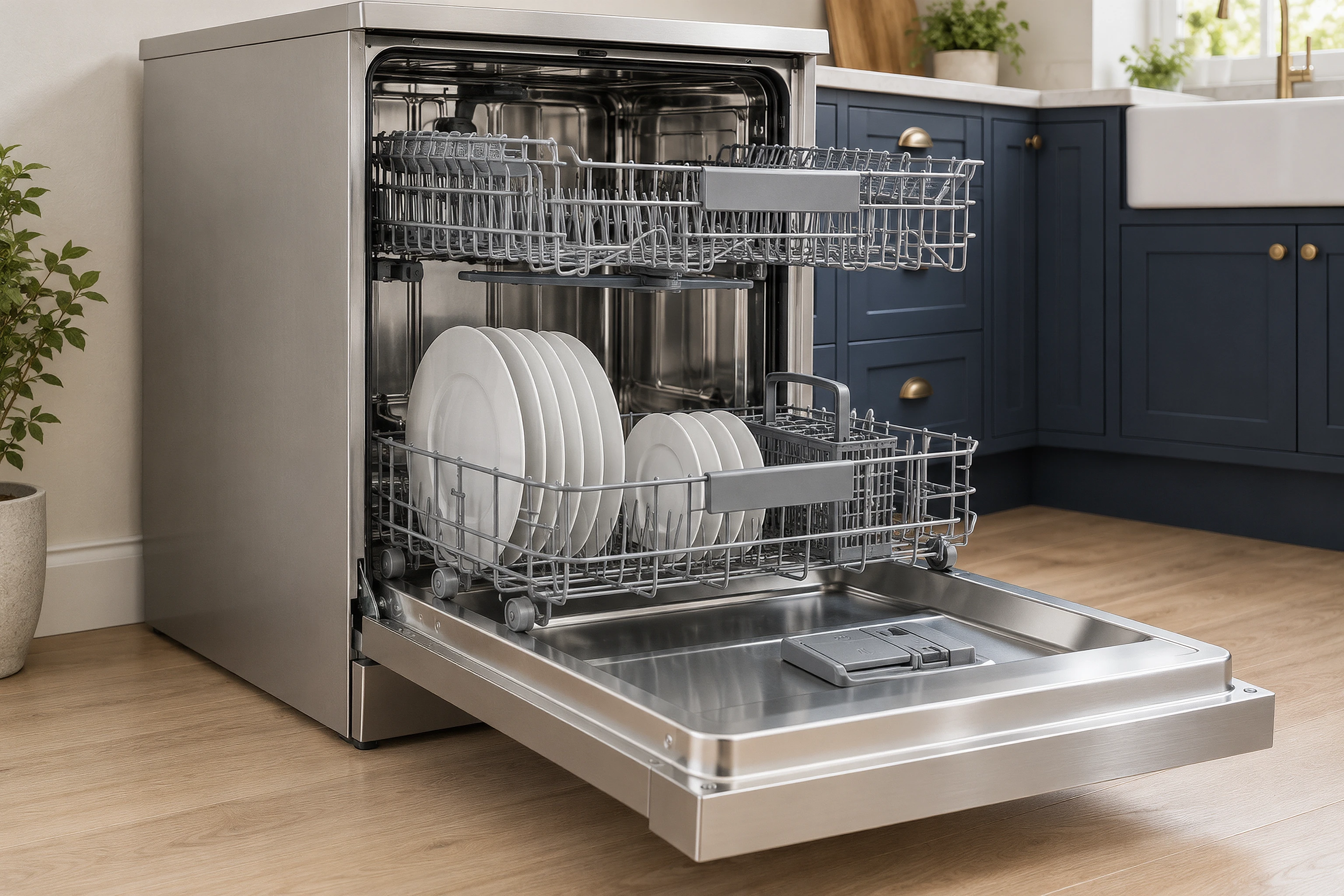
Repair guidance / Teka / BR2
Water remains after the programme
Describe the amount of water visible, when the cycle stopped and whether a drain sound was heard. Some water below the filter area can be normal for a particular design. Do not tilt the machine to clear a warning or remove a hose while water is present.
A different pattern: water leaks around the door
Note whether water appears early in the wash or near the end and whether foam is present. Loading, door sealing and water circulation can all affect what is seen at the front. Stop using the machine and avoid wet electrical points.
Equipment sharing space with other fittings
Mention stacked equipment, adjacent storage or a cupboard arrangement that limits access. An external picture can be useful. Leave the surrounding fittings in place until the person assessing the job confirms what access is required.
Identify this Teka model
Provide the complete model and serial number from a safely accessible rating label. Do not remove panels or move heavy equipment to find it.
Hayes in Bromley, Kent
Use the full BR2 address so this enquiry is identified as Hayes in Bromley, Kent. Include the appliance location within the property and the most useful contact number; a place name alone is not enough to confirm the visit.
Questions for this repair enquiry
What details help with “water remains after the programme”?
Keep the last successful operation separate from the first sign of the problem. For a report of “water remains after the programme”, say what still works and what no longer happens. If the other pattern, “water leaks around the door”, has also occurred, include its timing as a separate observation. Send these details with the full model and your Hayes postcode; they prepare the enquiry without identifying a part in advance.
How does “water leaks around the door” change the enquiry?
Treat that as additional evidence rather than proof that both symptoms have one cause. Explain whether the two patterns began together or appeared at different times. Include the fitting context — equipment sharing space with other fittings — so the assessment can account for safe access as well as the reported behaviour.