
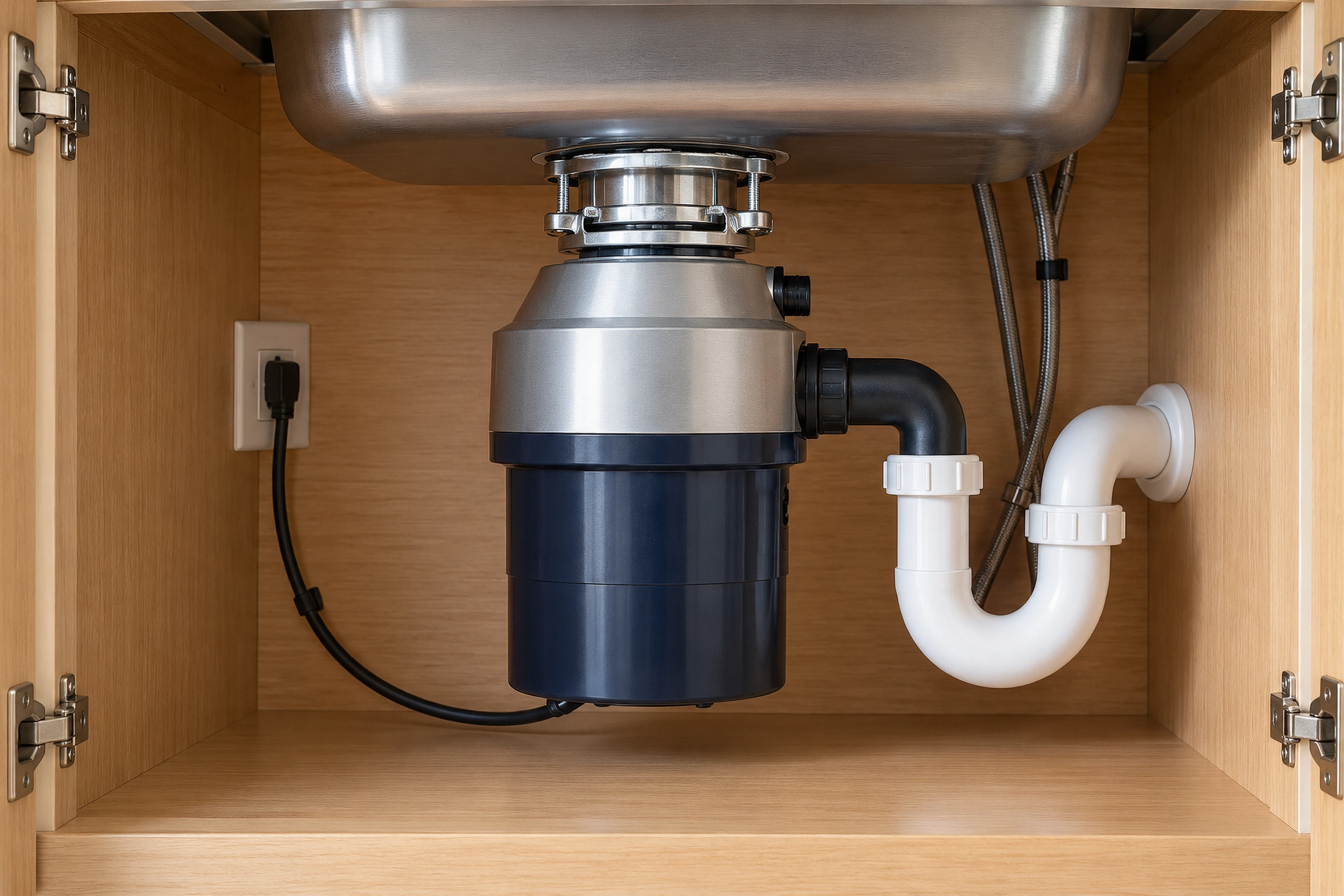
Repair guidance / InSinkErator / BR6
A harsh noise starts suddenly
Switch off and report what happened immediately before the noise began. A changed sound does not establish which internal component is damaged. Keep hands and implements out of the chamber and do not restart it to grind through the problem.
A different pattern: the unit cuts out during use
Record whether it stops immediately or after running for a while and whether any protection operates. Do not keep resetting a warm or stalled unit. Give the model and switching type so the enquiry is about the actual system rather than a generic replacement.
A fitted appliance behind a furniture door
Describe the visible furniture panel, plinth and surrounding cupboards. A built-in appliance needs its access and connection arrangement checked before removal; do not detach cabinetry or pull the appliance forward to make the enquiry.
Identify this InSinkErator model
Record the full InSinkErator model and whether it is continuous-feed or stopper-operated. Keep that information with the existing switch arrangement before discussing repair or replacement.
Arranging help in Orpington
Give the full BR6 postcode and a contact number for the Orpington property. Ask for the applicable visit charge and model acceptance before making arrangements. A model being listed on a guide is not confirmation of parts or an available appointment.
Questions for this repair enquiry
What details help with “a harsh noise starts suddenly”?
Keep the last successful operation separate from the first sign of the problem. For a report of “a harsh noise starts suddenly”, say what still works and what no longer happens. If the other pattern, “the unit cuts out during use”, has also occurred, include its timing as a separate observation. Send these details with the full model and your Orpington postcode; they prepare the enquiry without identifying a part in advance.
How does “the unit cuts out during use” change the enquiry?
Treat that as additional evidence rather than proof that both symptoms have one cause. Explain whether the two patterns began together or appeared at different times. Include the fitting context — a fitted appliance behind a furniture door — so the assessment can account for safe access as well as the reported behaviour.