
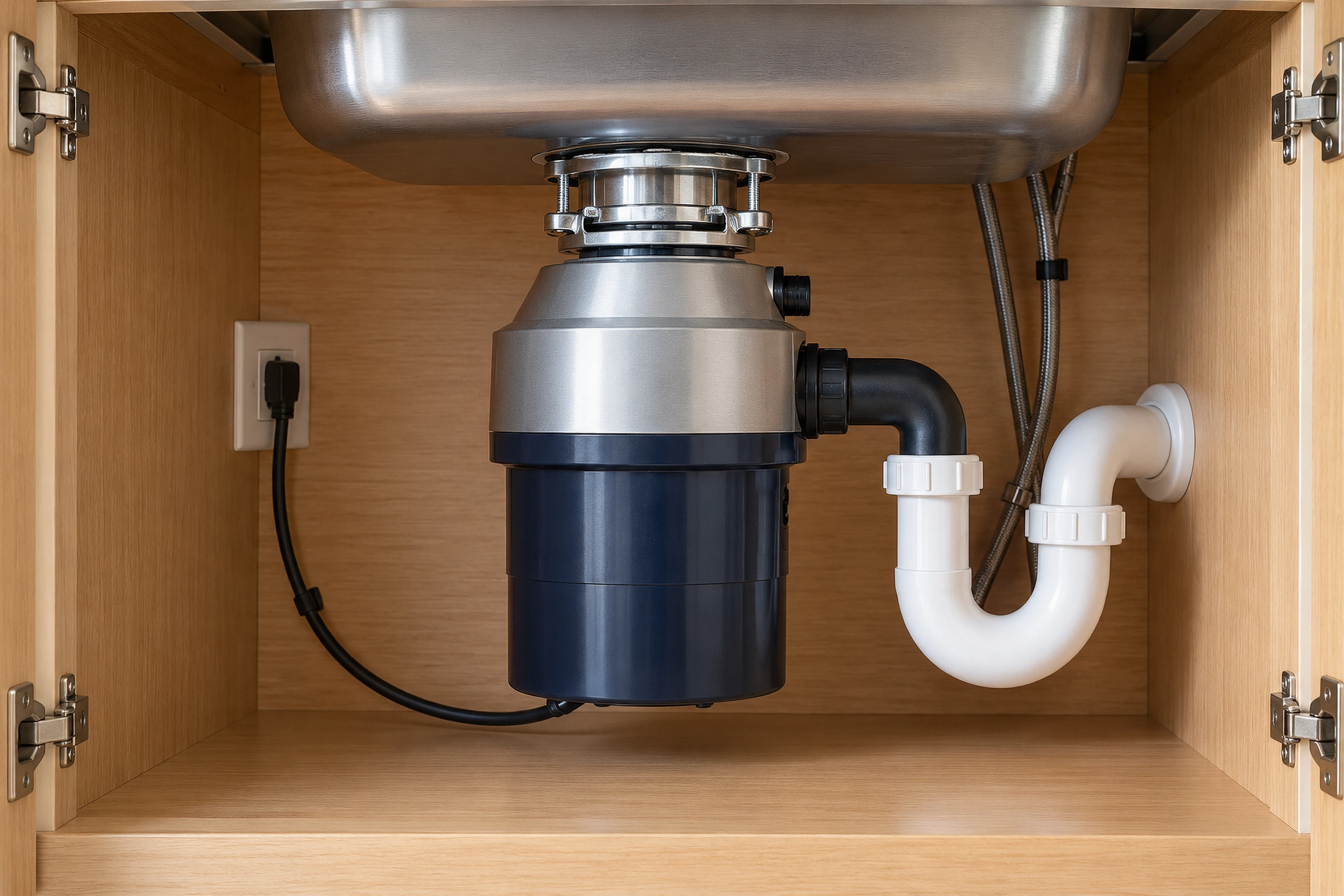
Repair guidance / InSinkErator / BR2
The unit hums without turning
Switch it off and stop trying repeated starts. Report whether it has been humming since the fault began and give the exact model. Never put hands, cutlery or tools into the grinding chamber; the operating arrangement must be identified first.
A different pattern: water leaks below the motor unit
Describe where the first water is visible: at the sink mounting, a waste connection or beneath the body. Keep away from wet electrics and stop use. Those locations can require different repair decisions, so do not assume that tightening the mounting will solve every leak.
A fitted appliance behind a furniture door
Describe the visible furniture panel, plinth and surrounding cupboards. A built-in appliance needs its access and connection arrangement checked before removal; do not detach cabinetry or pull the appliance forward to make the enquiry.
Identify this InSinkErator model
Record the full InSinkErator model and whether it is continuous-feed or stopper-operated. Keep that information with the existing switch arrangement before discussing repair or replacement.
Hayes in Bromley, Kent
Use the full BR2 address so this enquiry is identified as Hayes in Bromley, Kent. Include the appliance location within the property and the most useful contact number; a place name alone is not enough to confirm the visit.
Questions for this repair enquiry
What details help with “the unit hums without turning”?
Keep the last successful operation separate from the first sign of the problem. For a report of “the unit hums without turning”, say what still works and what no longer happens. If the other pattern, “water leaks below the motor unit”, has also occurred, include its timing as a separate observation. Send these details with the full model and your Hayes postcode; they prepare the enquiry without identifying a part in advance.
How does “water leaks below the motor unit” change the enquiry?
Treat that as additional evidence rather than proof that both symptoms have one cause. Explain whether the two patterns began together or appeared at different times. Include the fitting context — a fitted appliance behind a furniture door — so the assessment can account for safe access as well as the reported behaviour.