
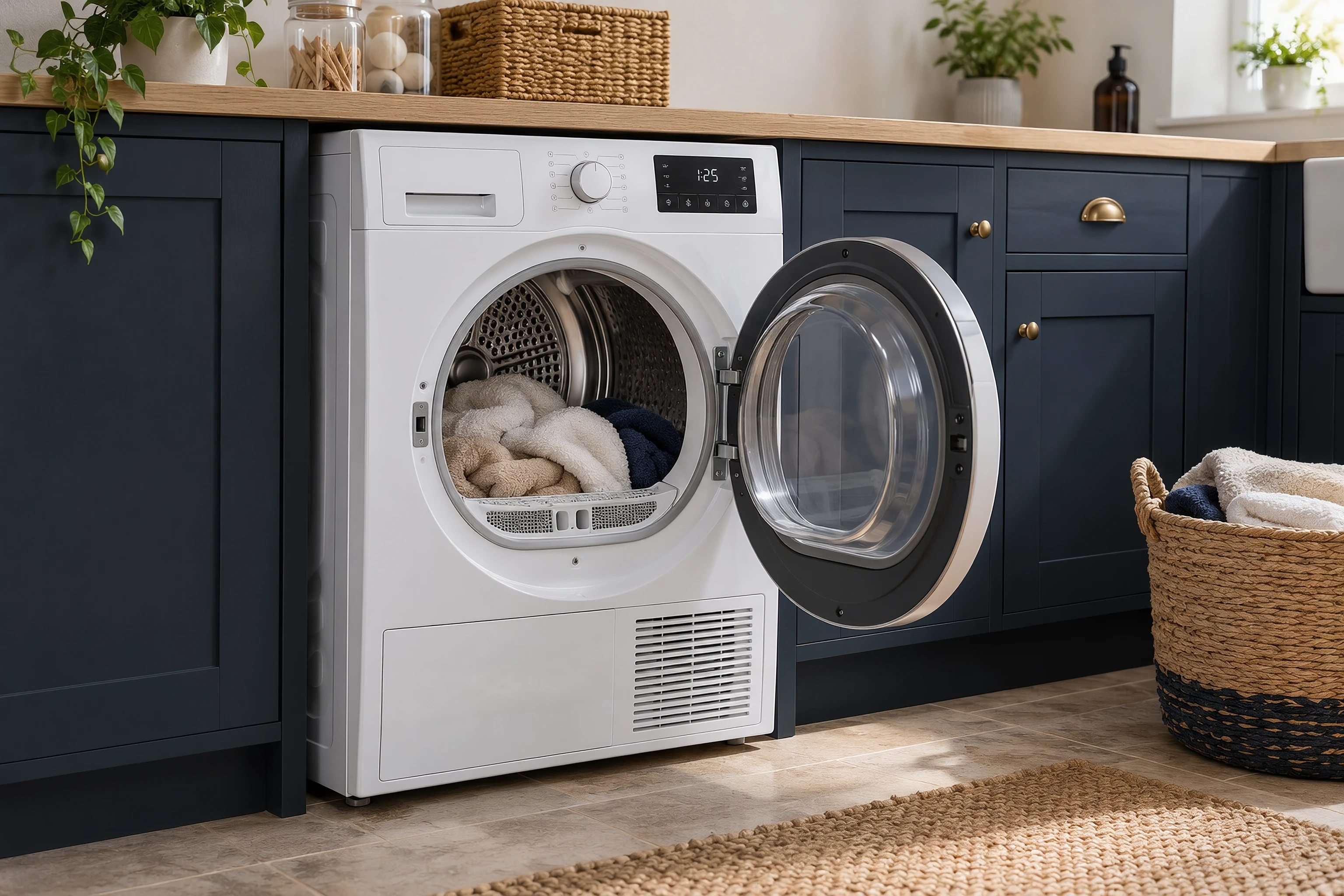
Repair guidance / Hotpoint / BR2
The drum does not turn
Tell us whether the display lights and whether a motor sound is heard before the dryer stops. A stationary drum can have more than one cause. Do not push-start the drum, defeat the door switch or continue running the appliance while it is stalled.
A different pattern: the control panel has no lights
Explain whether the appliance is completely silent or gives any brief response. Mention a tripped protective device or recent power interruption. Do not open the appliance or repeatedly reset the circuit; the supply and appliance need appropriate assessment.
Limited working space around the equipment
Give the available working space and describe anything that obstructs normal access. An appliance being visible does not make it safe to pull out or loosen: cables, connected pipework, fixings and the surrounding floor need to be considered before any movement.
Identify this Hotpoint model
Tell us the full model number and any service-code information printed on the label.
Preparing the Keston visit
Keep the Keston address and complete postcode together with the equipment details. Mention whether this enquiry concerns a fitted appliance, an existing pump or a unit below the kitchen sink so the intended work is clear before booking.
Questions for this repair enquiry
What details help with “the drum does not turn”?
Keep the last successful operation separate from the first sign of the problem. For a report of “the drum does not turn”, say what still works and what no longer happens. If the other pattern, “the control panel has no lights”, has also occurred, include its timing as a separate observation. Send these details with the full model and your Keston postcode; they prepare the enquiry without identifying a part in advance.
How does “the control panel has no lights” change the enquiry?
Treat that as additional evidence rather than proof that both symptoms have one cause. Explain whether the two patterns began together or appeared at different times. Include the fitting context — limited working space around the equipment — so the assessment can account for safe access as well as the reported behaviour.