
Repair guidance / Fisher & Paykel / BR5
The door will not release
Tell us whether the cycle has finished, the display is still active and water remains visible. Those details distinguish an interrupted programme from a door-release complaint. Do not prise the handle or attempt to defeat the interlock.
A different pattern: the wash result changes
Laundry that feels cold at the end of a cycle is not proof of failed heating because rinsing usually uses cold water. Describe the programme, detergent residue and cleaning result. Heating, sensing and programme control need assessment rather than a heater ordered on assumption.
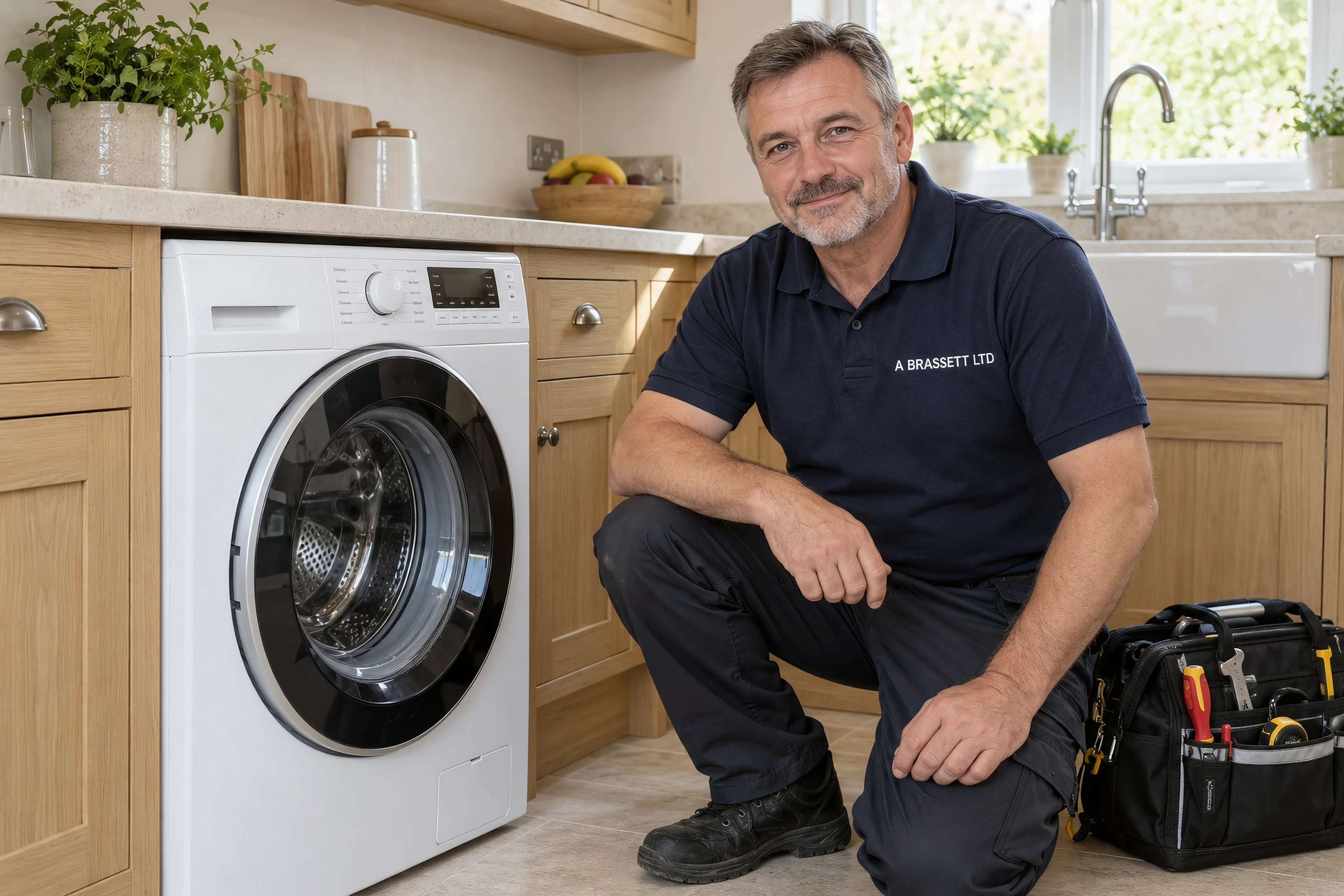
A fitted appliance behind a furniture door
Describe the visible furniture panel, plinth and surrounding cupboards. A built-in appliance needs its access and connection arrangement checked before removal; do not detach cabinetry or pull the appliance forward to make the enquiry.
Identify this Fisher & Paykel model
Provide the complete model and serial number from a safely accessible rating label. Do not remove panels or move heavy equipment to find it.
A clear Petts Wood repair brief
Use the complete BR5 postcode for the Petts Wood address. Write the displayed error exactly, including spaces or leading zeros where present, and distinguish it from the appliance model. Those two identifiers serve different purposes.
Questions for this repair enquiry
What details help with “the door will not release”?
Keep the last successful operation separate from the first sign of the problem. For a report of “the door will not release”, say what still works and what no longer happens. If the other pattern, “the wash result changes”, has also occurred, include its timing as a separate observation. Send these details with the full model and your Petts Wood postcode; they prepare the enquiry without identifying a part in advance.
How does “the wash result changes” change the enquiry?
Treat that as additional evidence rather than proof that both symptoms have one cause. Explain whether the two patterns began together or appeared at different times. Include the fitting context — a fitted appliance behind a furniture door — so the assessment can account for safe access as well as the reported behaviour.