
Repair guidance / Electrolux / BR7
The door will not stay closed
Describe whether the door catches, sags or closes but produces a door warning. Do not tape the door shut or defeat its switch. A model-label photograph and an external view of the hinge area help prepare the enquiry without dismantling anything.
A different pattern: the cabinet becomes unusually hot
Stop the dryer if overheating or a scorched smell is suspected. Note the model type and whether the change followed a move or surrounding storage being altered. Never bypass a thermal cut-out or treat repeated resets as a repair.
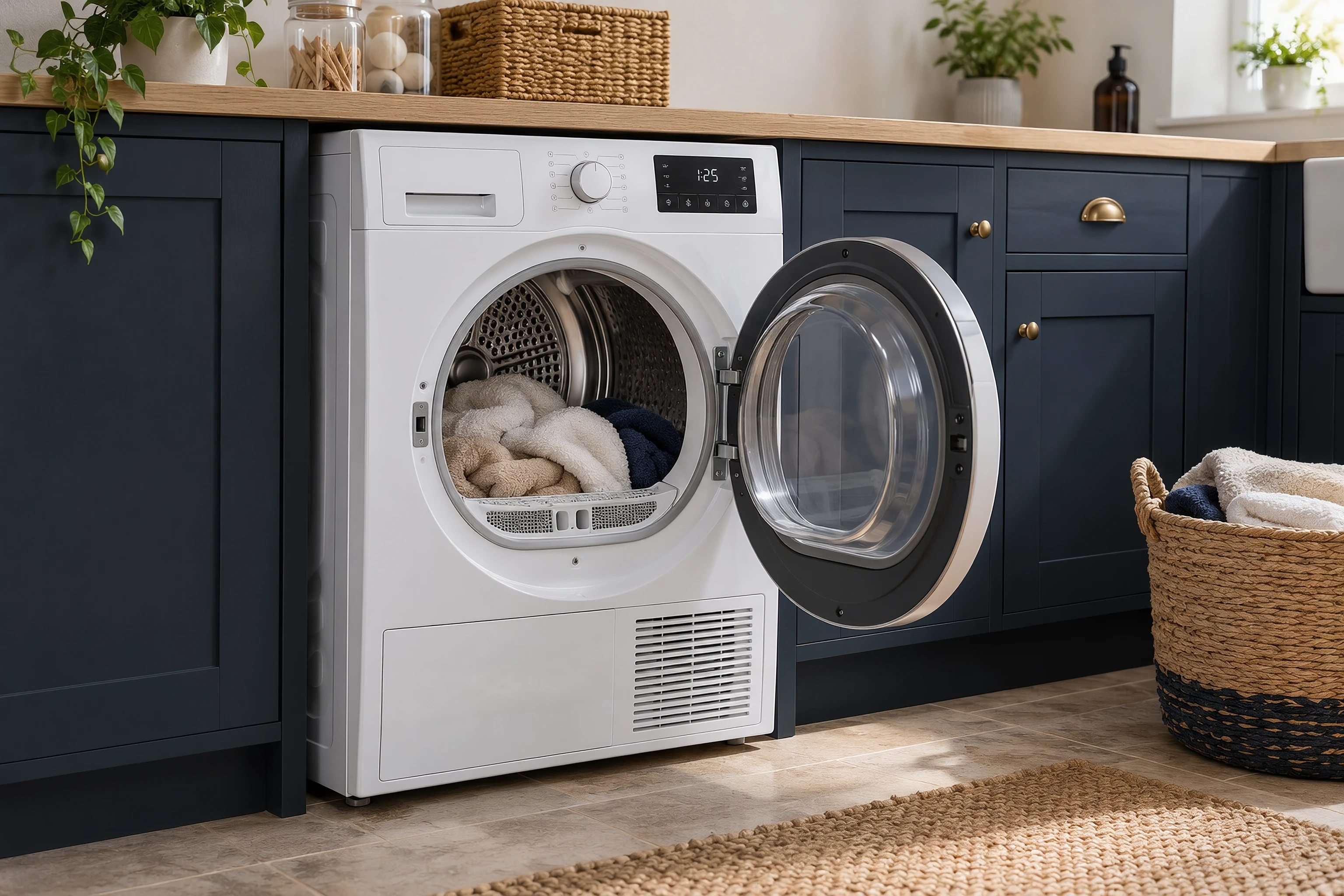
A fitted appliance behind a furniture door
Describe the visible furniture panel, plinth and surrounding cupboards. A built-in appliance needs its access and connection arrangement checked before removal; do not detach cabinetry or pull the appliance forward to make the enquiry.
Identify this Electrolux model
Include the product number (PNC), model and serial number from the label, if safely visible.
Chislehurst address and access
Include the full BR7 postcode and entry instructions for the Chislehurst property. If the equipment is integrated or concealed behind a furniture door, mention that in the enquiry. Leave panels in place and identify any access restriction in words or an external photograph.
Questions for this repair enquiry
What details help with “the door will not stay closed”?
Keep the last successful operation separate from the first sign of the problem. For a report of “the door will not stay closed”, say what still works and what no longer happens. If the other pattern, “the cabinet becomes unusually hot”, has also occurred, include its timing as a separate observation. Send these details with the full model and your Chislehurst postcode; they prepare the enquiry without identifying a part in advance.
How does “the cabinet becomes unusually hot” change the enquiry?
Treat that as additional evidence rather than proof that both symptoms have one cause. Explain whether the two patterns began together or appeared at different times. Include the fitting context — a fitted appliance behind a furniture door — so the assessment can account for safe access as well as the reported behaviour.