
Repair guidance / Britannia / BR2
The oven overheats
Report the chosen setting and what makes you think the temperature is excessive, such as food burning much sooner on a familiar recipe. Stop use if heating is uncontrolled. Do not alter internal thermostats or continue cooking to test a suspected control failure.
A different pattern: the fan runs but the oven stays cold
Specify the selected function and which cavity is affected. A rotating fan does not confirm that the heating circuit is working, and a cold result does not identify the failed part. Record whether another normal cooking function behaves differently without opening any panels.
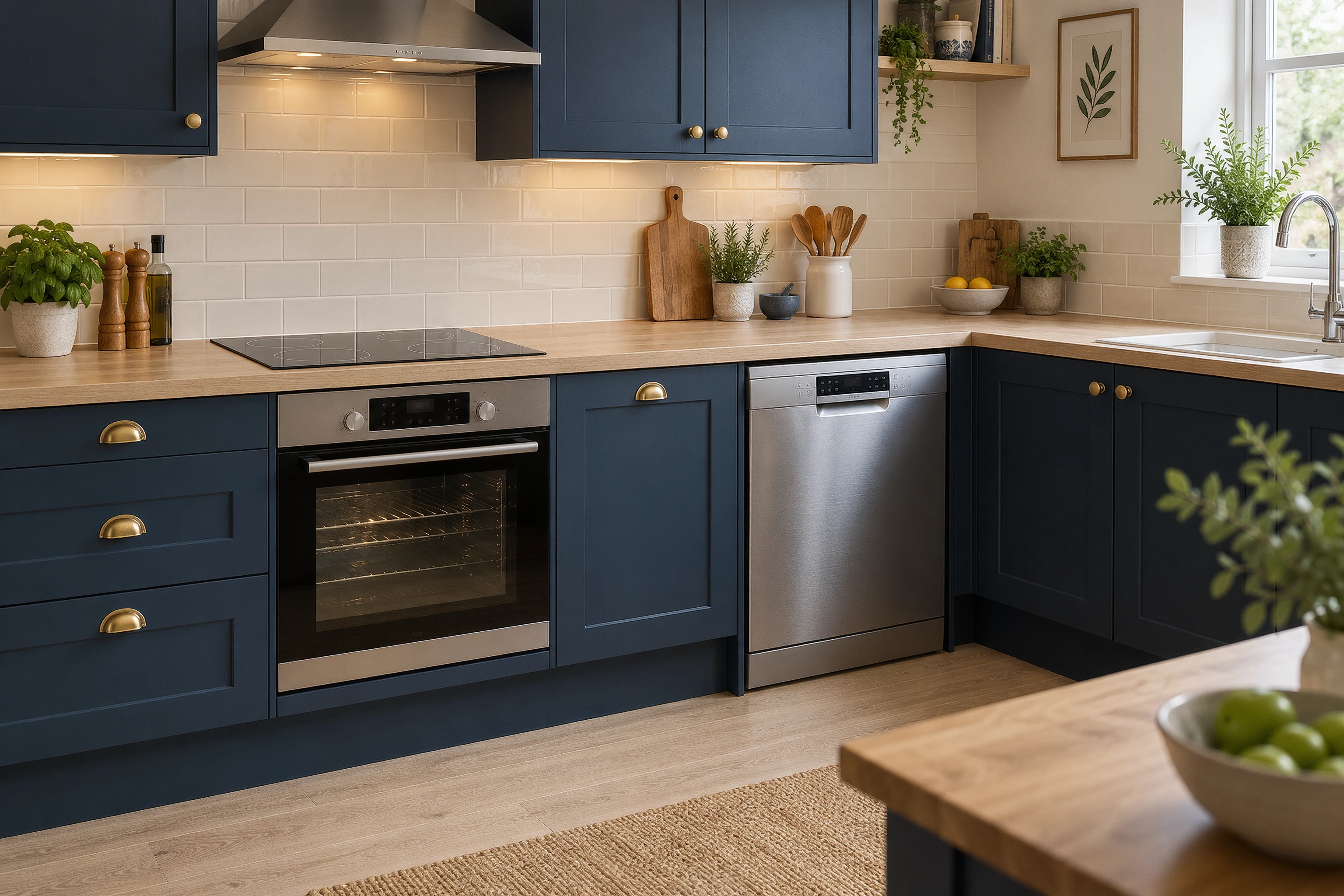
A fitted appliance behind a furniture door
Describe the visible furniture panel, plinth and surrounding cupboards. A built-in appliance needs its access and connection arrangement checked before removal; do not detach cabinetry or pull the appliance forward to make the enquiry.
Identify this Britannia model
Include the full model, fuel type, serial number and which oven, hob zone or control has failed. Gas work and engineer qualification must be confirmed before acceptance.
Preparing the Keston visit
Keep the Keston address and complete postcode together with the equipment details. Mention whether this enquiry concerns a fitted appliance, an existing pump or a unit below the kitchen sink so the intended work is clear before booking.
Questions for this repair enquiry
What details help with “the oven overheats”?
Keep the last successful operation separate from the first sign of the problem. For a report of “the oven overheats”, say what still works and what no longer happens. If the other pattern, “the fan runs but the oven stays cold”, has also occurred, include its timing as a separate observation. Send these details with the full model and your Keston postcode; they prepare the enquiry without identifying a part in advance.
How does “the fan runs but the oven stays cold” change the enquiry?
Treat that as additional evidence rather than proof that both symptoms have one cause. Explain whether the two patterns began together or appeared at different times. Include the fitting context — a fitted appliance behind a furniture door — so the assessment can account for safe access as well as the reported behaviour.